- Home
Knowledge Center
Regulatory Frameworks, Standards & Technical References
| No. | Document / Programme Name | Purpose | Authority | URL Link | SOLAR PV SYSTEMS (Residential, Commercial & Industrial) |
|---|---|---|---|---|
| 1 | Net Energy Metering (NEM) | Governs the export of excess solar energy to the grid and defines eligibility, system sizing rules and billing mechanisms. | Sustainable Energy Development Authority (SEDA) | Reference |
| 2 | Self-Consumption (SELCO) | Framework for on-site solar PV generation without energy export, commonly used for C&I rooftops. | SEDA Malaysia | Reference |
| 3 | NEM & SELCO Technical Guidelines | Defines engineering, metering, protection, commissioning and compliance requirements for grid-connected solar PV systems. | SEDA Malaysia | Reference |
| 4 | TNB Solar PV Grid Connection Requirements | Sets technical and safety requirements for connecting solar PV systems to the TNB distribution network. | Tenaga Nasional Berhad (TNB) | Reference |
| No. | Document / Programme Name | Purpose | Authority | URL Link | BATTERY ENERGY STORAGE SYSTEMS (BESS) |
|---|---|---|---|---|
| 5 | Electricity Supply Act & Regulatory Framework | Regulates electricity installations, licensing and safety compliance, including BESS systems. | Energy Commission (Suruhanjaya Tenaga) | Reference |
| 6 | Malaysia Grid Code | Governs how BESS systems interact with the grid, including protection, control, dispatch and system stability. | Grid System Operator (GSO) | Reference |
| 7 | Codes & Guidelines for Grid-Connected Systems | Reference documents for system integration, operational limits and coordination of BESS with PV and loads. | GSO Malaysia | Reference |
| No. | Document / Programme Name | Purpose | Authority | URL Link | EV CHARGING (Commercial & Industrial Context) |
|---|---|---|---|---|
| 8 | Electrical Installation Regulations & Guidelines | Ensures safety, compliance and licensing requirements for EV charger installations. | Energy Commission | Reference |
| 9 | Distributed Energy Resources (DER) Integration | Covers integration of EV chargers alongside solar PV, BESS and smart loads within TNB’s network. | Tenaga Nasional Berhad (TNB) | Reference |
| No. | Document / Programme Name | Purpose | Authority | URL Link | Energy Management Systems (EMS) & Performance Monitoring |
|---|---|---|---|---|
| 10 | Grid Code (System Operations) | Defines how EMS coordinates solar PV, BESS and site loads while maintaining grid stability. | Grid System Operator (GSO) | Reference |
| 11 | SEDA Online & Monitoring Platform | Supports compliance reporting, system performance tracking and programme administration. | SEDA Malaysia | Reference |
Regulatory Notice
The regulatory information referenced on this website is provided for general informational purposes only and does not constitute legal or technical advice. Applicable requirements may vary based on project scope, location and regulatory updates. SimpliSolar will advise on relevant regulatory obligations as part of project evaluation and execution.
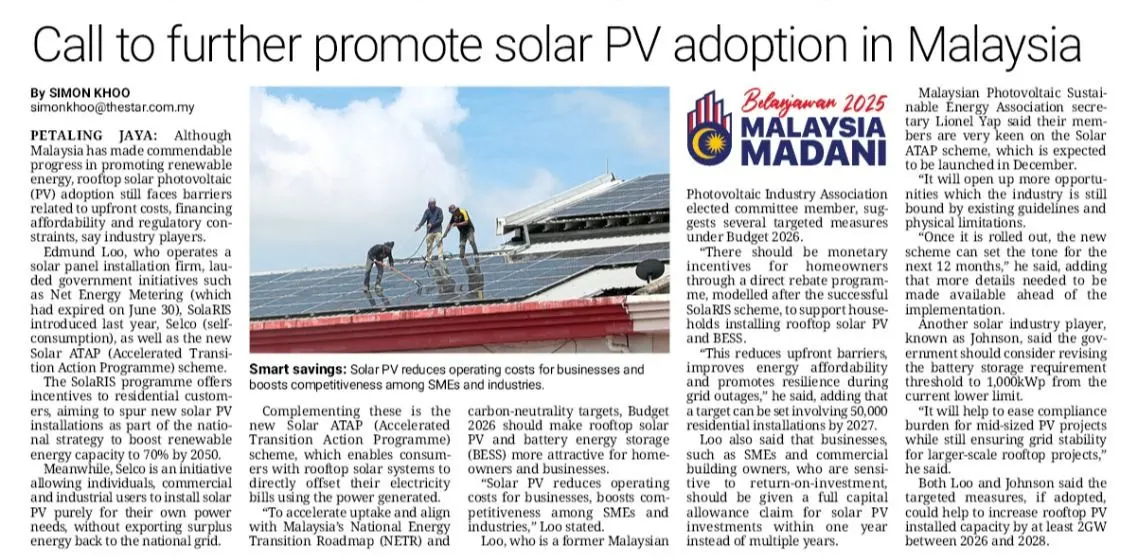
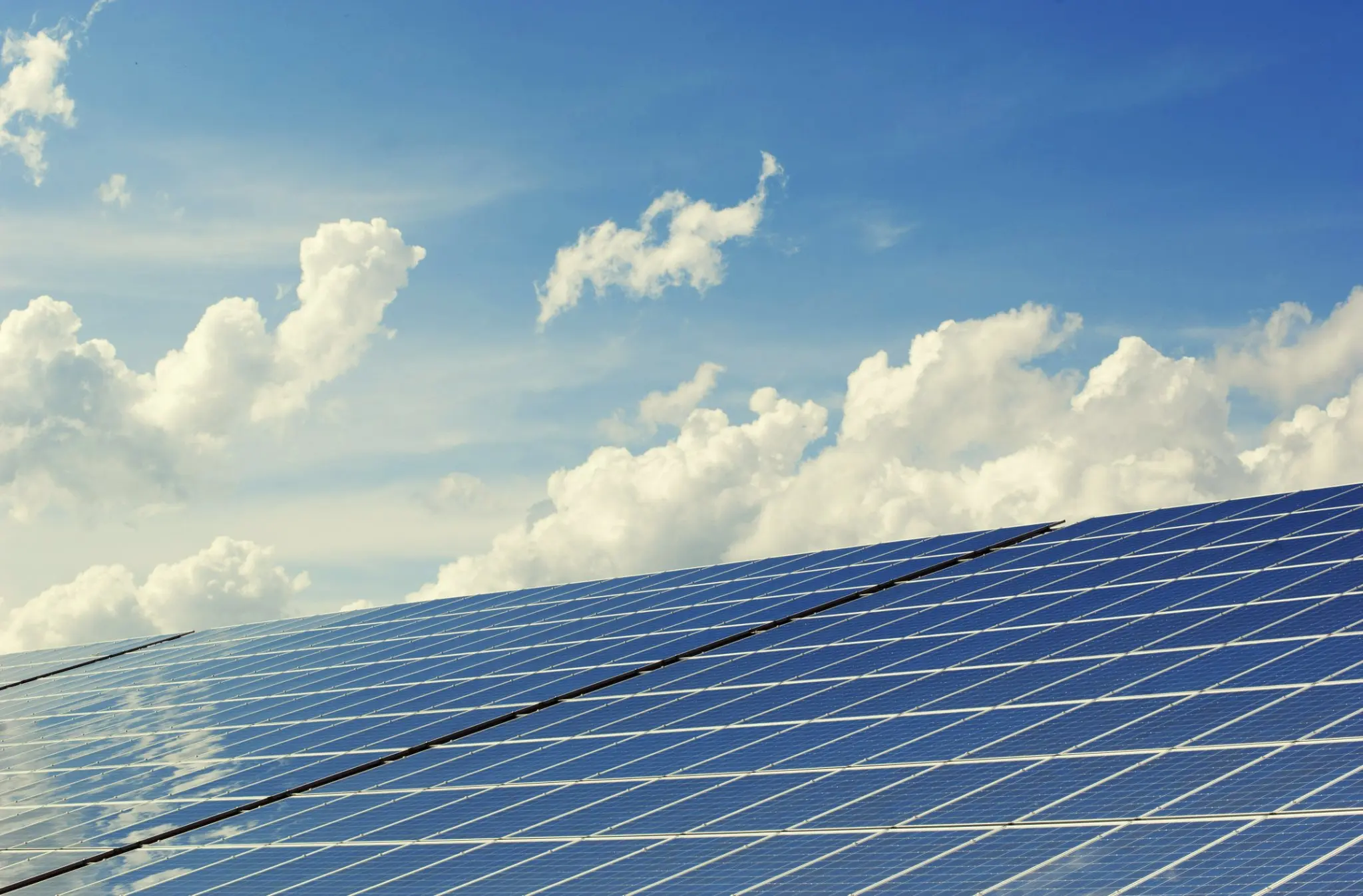
Residential solar PV systems generate electricity from sunlight using rooftop solar panels. The energy produced is first used to power the home in real time, reducing reliance on grid electricity. Any excess energy can be exported to the grid or managed based on the applicable regulatory scheme. SimpliSolar designs residential systems to balance energy savings, safety, regulatory compliance, and long-term reliability.
Commercial and industrial (C&I) solar PV systems are designed around higher energy loads, operational patterns, and commercial objectives. Unlike residential systems, C&I solutions focus on system sizing accuracy, demand management, operational continuity, and long-term cost optimisation. SimpliSolar engineers C&I systems based on actual load profiles, business operations, and future expansion plans.
Battery Energy Storage Systems (BESS) for maximum demand (MD) shaving store energy and discharge it during peak demand periods to reduce demand charges imposed by utilities. Properly designed BESS systems help commercial and industrial users lower electricity costs, improve energy resilience, and stabilise load profiles. Effective MD shaving depends on accurate assumptions, control strategies, and system integration — not just battery size.
EV charging infrastructure can be integrated with solar PV and BESS to optimise energy usage and reduce grid dependency. Solar energy can power EV chargers directly during the day, while BESS supports charging during peak or off-sun periods. Integrated energy management systems (EMS) coordinate solar generation, battery storage, EV charging demand, and grid interaction to improve overall system economics.
Yes. SimpliSolar manages the full regulatory and approval process, including submissions to the Sustainable Energy Development Authority (SEDA) and coordination with Tenaga Nasional Berhad (TNB). This includes system design compliance, technical documentation, grid connection requirements, testing, and commissioning. Clients benefit from a single accountable partner throughout the approval and delivery lifecycle.
These responses reflect SimpliSolar’s engineering and delivery practices, aligned with applicable Malaysian regulatory frameworks, utility requirements and industry standards.